Say the Figure, Then Shut Up: A Month of Pricing Without the Flinch
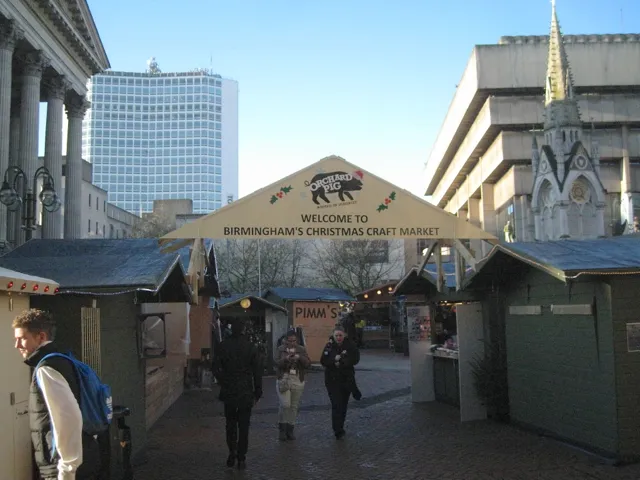
Photo: Robin Stott , CC BY-SA 2.0, via Wikimedia Commons
Four weeks ago I decided to stop treating prices like the start of a negotiation. Every piece I sold this November — at a village-hall market, in emails, on the website — got one plain figure and a full stop. No 'but I'm flexible'. No 'make me an offer'. No quiet discount slipped in because the silence got too loud. This is what happened.
The First Market: A Number and a Silence
The first test was a Saturday market in a hired hall, the sort with a tea urn, a raffle and a woman selling knitted angels. I had a row of oak serving boards on the table. A bloke in a navy fleece picked one up, turned it over and asked how much. I said, 'Forty-two pounds.' Then I stopped talking.
That silence was the whole experiment. Old me would have filled it. Old me would have said, 'But I could do thirty-five if you're interested.' I would have invented a discount before he had even asked for one. This time I let the number sit there. He nodded, asked whether it was oiled, and paid by card. No drama. No haggling. Just a price and a pause.
It did not work every time. One woman laughed and said she thought it was a tenner. Another asked if the price included the tea. But most people simply nodded or walked on. The market did not collapse because I had said a number out loud without apologising for it.
The Discount I Nearly Gave Away
Midweek, an email came in from someone fitting out a small café. They wanted three framed prints for the back wall. I typed out the reply: 'Seventy-five pounds for the three, but I could do sixty if that helps.' I looked at it for a minute. Then I deleted the second half and sent: 'Seventy-five pounds for the three, including delivery.'
They replied within the hour. 'That works. Can you drop them Friday?'
That is the bit that stings. I had been ready to knock fifteen quid off a job that had not even asked for a reduction. The discount was not a response to anything. It was a reflex, like saying sorry when someone bumps into me. The price was a sentence. I had been treating it like a question.
What the Website Did When I Stopped Hiding
For years my website had said 'from £…' and 'contact for pricing'. That felt safe. It also meant every enquiry began with someone asking what I charged, and me writing a careful email that tried to sound reasonable. This month I put actual numbers on the site. Straightforward ones. Postage included in the UK. A line about what the price covers.
The enquiries went down. The good ones went up. One person wrote, 'First time I've known what you charge without having to ask.' Another asked if I did a smaller version, which I did, and that was that. Nobody sent me a spreadsheet and demanded a breakdown of my hourly rate. They just wanted to know the figure before they got attached to the thing.
UK Buyers Are Not One Thing
Some people want a bargain. That is fine. At a car boot sale in the summer I have sold things for a pound and been glad of it. But a craft market is not a car boot sale, and I had been pricing as if every customer was about to haggle me into the ground.
One woman at the hall picked up a small bowl, asked the price, and when I said eighteen pounds she said, 'That's very reasonable,' and bought two. Another man looked at a stool, heard 'ninety', and put it down without a word. Both reactions are allowed. The price is not a moral test. It is a filter. It tells people whether they are in the right shop.
The Maths Lecture I Refused to Give
I could turn every price into a speech about materials, hours, stall fees and the cost of sandpaper. Sometimes I do, if someone genuinely asks. But most people do not want a lecture. They want to know whether the thing is worth it to them. A price is a sentence, not a maths lesson.
What I have started saying, when asked, is simple: 'That covers the wood, the finish, the hours and the stall fee.' If they want more detail, they ask. If they do not, we both get on with our day. Small-scale making does not need to be dressed up as a business seminar to be taken seriously.
The Sentence Has a Full Stop
I still flinch. Saying 'forty-two pounds' still feels like standing in the middle of a room with my coat on the wrong way round. But it gets easier. The trick is to write the price down before the event, say it once, and then wait. Do not fill the gap. Do not offer a discount that nobody requested. Do not turn a number into an apology.
The price is a sentence. It ends with a full stop. The other person can reply however they like.