Pinned, Taped and Slightly Damp: A Month Reading the Village's Real Newspaper
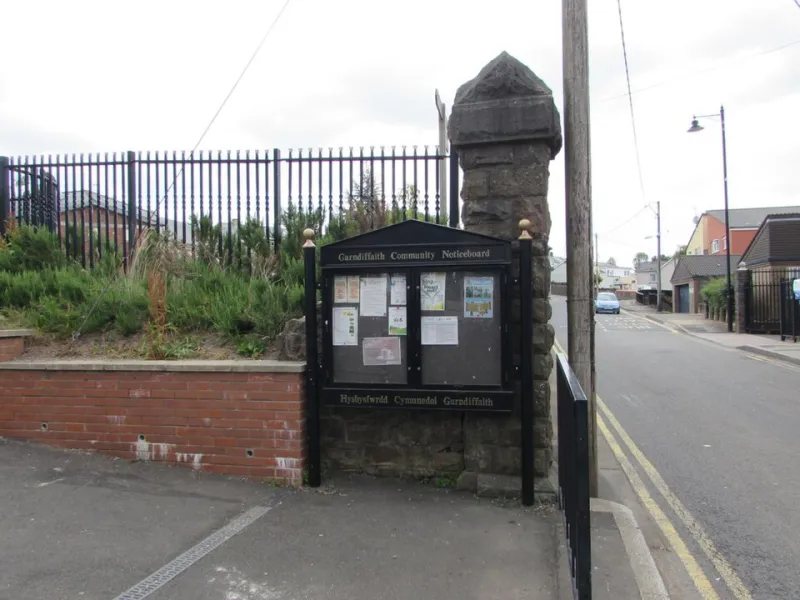
Photo: Jaggery , CC BY-SA 2.0, via Wikimedia Commons
For thirty-one days I walked the same three-quarters of a mile. Bus stop, library, café window, church hall porch, village hall lobby, the bit of wall by the Post Office counter, the scout hut gate. I took photographs, but not to archive anything. I wanted to actually read the notices, the way you read a newspaper rather than the way you scan a screen.
By day three I had stopped thinking of them as decoration. By day ten I had started thinking of them as a publication. By the end of the month I was fairly convinced that the most honest design work in this country is currently being done with a biro, a sheet of A4 and whatever tape was in the drawer.
The board is a newspaper with no editor
Nothing gets rejected at a village noticeboard. There is no style guide, no commissioning meeting, no one asking whether the piece is on-brand. A missing cat goes up next to a yoga class, which goes up next to a parish council agenda, which goes up next to a hand-drawn poster for a jumble sale that was clearly made at half nine the night before.
What surprised me was how well it works. Not because the design is good — most of it is dreadful in a way I found genuinely uplifting — but because the hierarchy sorts itself out. Urgent things go near eye level. Permanent things get laminated. Things aimed at parents go near the school gate. Things aimed at people with a car go where people park.
There is more editorial judgement in where a poster is pinned than in most content calendars I have seen.
Somebody has to feel allowed to ask
You can tell a lot about a place by what it permits people to request in public.
Some notices were practical and confident. Chess club, Wednesdays, all welcome, bring a mug. Some were quietly desperate. A handwritten card asking whether anyone driving to the hospital on a Thursday might have room for one more. A note offering to collect prescriptions for anyone shielding. A short, slightly apologetic advert for a lawnmower that had been sitting in a garage for eleven years.
The difference between those two categories was rarely the size of the ask. It was the tone. The confident ones assumed a yes. The others spent their first two lines explaining why they were bothering you at all.
I recognise that instinct. I have written emails that began with three paragraphs of apology before getting to the point. What the noticeboards showed me is that the apology is not the thing that makes people help. The specificity is. The card that said Thursday, 2pm, hospital, one seat, was easier to answer than the one that said if anyone could possibly help at some point.
Tear-off tabs are the best technology in the village
I have become slightly obsessed with tear-off phone number tabs.
They are a design solution so obvious that nobody credits it. One sheet, one pair of scissors, fourteen identical strips, and suddenly a stranger can take your number without having to find a pen, remember it, or commit to a conversation. It removes the social cost of being interested.
The failures are just as revealing. The adverts where the tabs have been printed but not cut, so they hang there like a promise nobody can act on. The ones where all fourteen tabs are still attached after a fortnight, which tells you something about the event or the person or the phone number, and none of it is good. The ones where somebody has clearly been back three times to re-pin a fresh sheet because the first two got rained on.
And the best ones, the ones that actually worked, had the tabs cut properly and the number written twice, once on the tab and once in bold on the body, because the person who made it had thought about what happens when the tab is gone.
That is user research. It just isn't called that.
Lamination is a claim about the future
A laminated sign is a statement of intent. It says: this will still be true in March.
Sometimes that is correct. The bin collection calendar, the defibrillator location, the number for the boiler man. Sometimes it is wildly optimistic. I found a laminated poster for a summer fete that had happened in July, still cable-tied to a fence in November, curling at one corner like it was trying to leave.
What lamination buys you is weatherproofing. What it costs you is the ability to change your mind. The handwritten cards, taped up with two strips of Sellotape and a bit of hope, are always more current. They are also always slightly sad by the time they come down, because the thing they were announcing has already happened.
There is a lesson there for anyone who makes things, myself included. Polish is not the same as permanence, and permanence is not the same as being right.
The grammar of small public appeals
I started collecting the language. Not to mock it — to learn from it.
Good notices were short, front-loaded and specific. Bad ones buried the offer in the third sentence. Almost all of them over-explained, which I now think is a British nervousness about taking up space in public. We apologise for the notice, then apologise for the thing the notice is about, then give the time and date.
The best one I saw all month was a single index card in a café window. It said: Guitar lessons. Saturdays. Tenner. Ask for Deb. There was a tab at the bottom with a number on it. No apology, no logo, no adjectives. It had been there so long the paper had gone the colour of weak tea.
I have thought about that card more than any advert I have seen this year. It knew exactly what it was for. That is rarer than it should be.
What I am taking back to the workshop
I make things, and I have a habit of over-designing the announcement and under-designing the thing. This month has flipped that. My next open workshop notice is going up on plain paper, in pen, with the time in the largest letters I can manage and the tabs actually cut through with scissors.
No laminator. Not yet. I want to see whether it survives the weather first. If it does, I will know the notice was worth making. If it doesn't, I will know something more useful, which is that I was asking for the wrong thing in the wrong place.
The village already publishes. It just does it with Sellotape. I would rather read that than most of what arrives in my inbox, and I would rather add to it than to the pile of things nobody pins up.