The Carrier Bag Test: Three Months of Making Small on Purpose
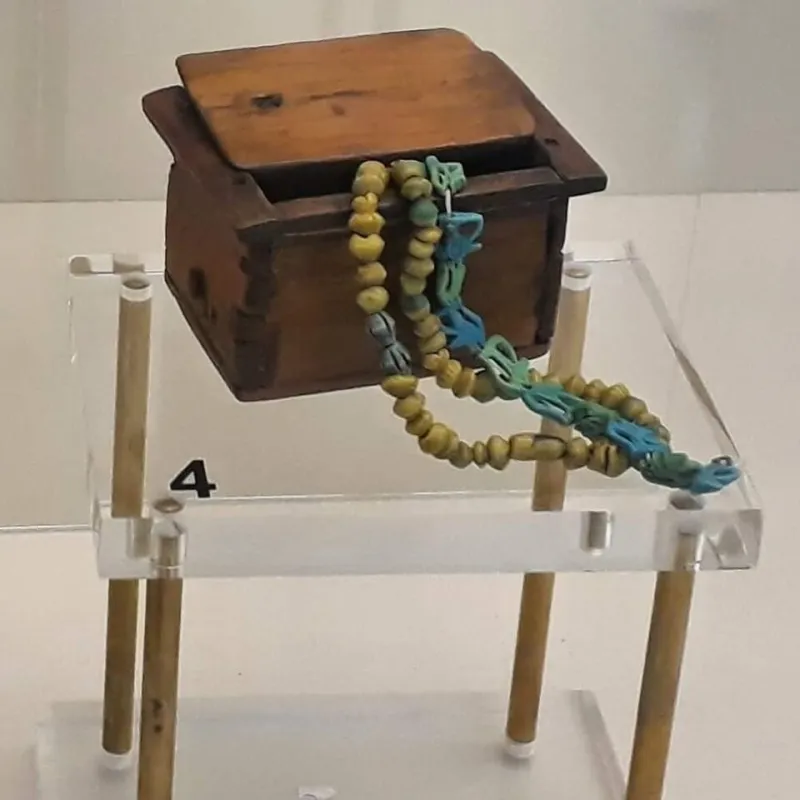
Photo: SpeakingArch, CC BY-SA 4.0, via Wikimedia Commons
On the first Saturday in August 2026, I cleared the bench, put a Tesco Bag for Life in the middle of it, and made a rule. Every project for the next three months had to fit inside that bag. Not the tools. Not the offcuts. The finished thing. If it didn't fit, it wasn't getting made.
I'd like to say this was a noble experiment in minimalism. It wasn't. I'd spent most of July moving half-finished boxes around the workshop so I could get to the vice. The bag was less a design philosophy and more a blunt instrument. It worked.
The rule, and the bag
The bag is an ordinary reusable carrier, roughly 40cm by 30cm by 25cm when it's behaving itself. I didn't measure it. That felt like cheating. The point was that it's a familiar size, the sort of thing you'd carry home from the shop without thinking about it. If I started calculating diagonal clearances, I'd already lost the plot.
The practical version of the rule was this: the main material had to come out of the bag, or be cut from something small enough to have come out of it. No sneaking a full sheet of 18mm ply onto the bench and pretending the finished object would somehow shrink. No stockpiling 2.4 metre lengths of timber and cutting them down after the fact. If the raw material couldn't plausibly live in the bag, the project was out.
That sounds restrictive. It was. It was also the most useful creative slap I've given myself in ages.
Smaller stock, better decisions
My material choices changed within a fortnight. I stopped buying big sheets and started using what was already in the offcut pile: short lengths of ash, small bits of birch ply, a few strips of walnut I'd been saving for a 'proper' project. The proper project never arrived, so the walnut became a small sliding-lid box instead. It's now holding drill bits.
There's a particular kind of honesty that comes from working with small stock. You can't hide a bad join behind a large surface area. You can't convince yourself the design is ambitious because it's big. A 20cm box has to be right at 20cm. The proportions have to work. The lid has to sit properly. There's nowhere to put the mistakes.
I also bought less. That wasn't the aim, but it was a side effect. When you know you only need enough timber for something that fits in a carrier bag, you stop browsing the timber yard like you're furnishing a restaurant. I spent less on materials in those three months than I did in the previous six weeks. That's not a boast. It's a slightly embarrassing statistic.
The finish line got closer
Here's the number that surprised me: I finished eleven projects between August and the end of October. In the three months before that, I finished four out of nine. Same person, same bench, same amount of free time. The only difference was scale.
Small projects get finished because they don't have time to become intimidating. A box that fits in a bag doesn't sit on the bench for three weeks while you 'think about the finish'. You can sand it in an afternoon. You can apply oil while the kettle boils. The gap between starting and finishing is short enough that you don't lose interest, and short enough that you don't start redesigning it halfway through.
I'm not saying everything should be small. I'm saying that finishing things is a habit, and big projects are terrible at building habits. They're too good at teaching you to live with incomplete work. The bag made finishing the default. That's worth something.
The big-tool escape hatch
One of the less flattering things I learned is how often I use tools as a way of avoiding the actual problem. When a project gets awkward, my instinct is to reach for a bigger clamp, a different router bit, or a trip to Screwfix for something with a motor. The bag made that look ridiculous. You don't need a planer thicknesser to make a 30cm box. You need to sharpen your plane and stop fussing.
That's not an argument against good tools. I like good tools. But there's a temptation to hide behind them, to let the setup become the work. The bag removed that escape hatch. If the project was small, the tooling had to be small too, and the excuses had to get smaller with it.
I did break the rule once. I borrowed a friend's mitre saw for a set of small picture frames. It sat on the bench for two days and I used it for about four cuts. The frames still fit in the bag. The saw didn't. I'm not proud of it, but I'm telling you because the experiment only works if you're honest about the cheats.
Where it went wrong
Not everything was a triumph. The first proper failure was a folding stool. I designed it around the bag's dimensions, cut all the parts, then realised the legs splayed to 62cm when opened. It wouldn't fit. I tried angling it. I tried turning it upside down. I tried telling myself the bag was more of a guideline. In the end it became a plant stand in the garden, which is a polite way of saying it failed upwards.
The second failure was more subtle. I started making a small wall cabinet, then shrank it into a drawer unit, then shrank it again into a box. By the time I finished, it fit beautifully. But it wasn't the project I'd set out to make. I'd moved the goalposts and then congratulated myself on the goal. That's not a constraint. That's a bait and switch.
The third failure was the bag itself. Halfway through September, the handles gave out. I kept using it anyway, which meant the rule was now being enforced by a torn carrier bag with a hole in the bottom. It felt less like a creative boundary and more like a bin liner. I replaced it with another Bag for Life and carried on. The new bag is slightly bigger. I've decided not to measure the difference.
What I'm keeping
The three months are over, but the bag is still by the bench. I'm not making it a permanent law. I've got a small bench hook to build and a shelf that needs replacing, and neither of those is going to fit in a carrier bag without a fight. But I'm keeping the test as a question I ask before I start: is this project the right size for the time and space I've actually got?
That's the real lesson. The bag isn't about being small for the sake of it. It's about being honest about scale. Big projects aren't inherently more ambitious. Sometimes they're just better at hiding. Small projects finish, and finishing teaches you more than another three weeks of 'thinking about it' ever will.
If you're stuck in a run of half-finished work, try it. Put a shopping bag on the bench. See what fits.