The Cash Box Doesn't Lie: A Morning Selling Unfinished Things at a Car Boot Sale
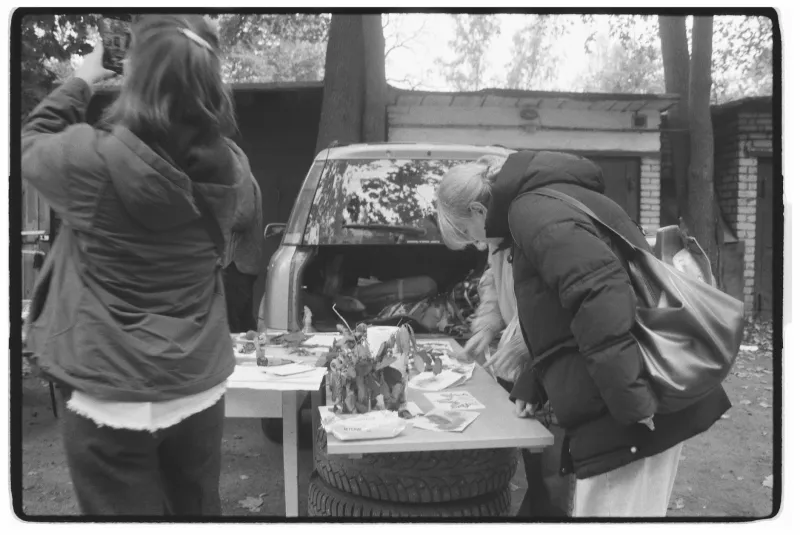
At 6:40 on a Saturday morning in November, I was standing in a field in the sort of cold that makes your fillings ache, trying to work out whether a folding table can be assembled with one hand while holding a flask in the other. It cannot. The pitch cost £10. The flask was tea. The table was the sort that folds in half and takes a finger with it. I had come to sell the stuff under my bench: offcuts, duplicates, half-finished projects, a box of hinges I bought in 2019 for a job I never did.
I wasn't there to make money. I was there because I'd been stuck on pricing my own work. I can tell you what a sheet of ply costs. I cannot tell you what an hour of fiddling is worth. So I did what any sensible person does when they don't know the answer: I put everything on a table and asked strangers.
The 50p hour
Rule one: for the first hour, everything was 50p. No negotiating. I wrote it on a piece of card in marker pen, taped it to the table, and stood back.
The first buyer was a man in a fleece who picked up a small oak offcut, turned it over, and asked if I'd take 30p. I said it was 50p. He bought three. Another woman asked what a half-made shelf was. I said it was a lesson in clamping. She laughed and bought it for 50p. A bag of forty assorted screws went in four minutes. The dovetail practice box I'd sanded to 400 grit sat there like a museum exhibit. Nobody touched it.
That was the first lesson, and it arrived before 8am: the buyer does not care how long it took. They care whether it fits in the boot, whether it's a bargain, and whether it solves a problem they already have. My effort was invisible. That stung for about a minute, then it was oddly freeing.
What actually sold
The things I thought would go didn't. The polished stuff, the neat stuff, the things I'd made carefully and was slightly proud of — they were ignored. The odd bits went. A jar of mixed brass hinges. A box of short dowels. A roll of sandpaper that had gone slightly furry at the edge. A tiny vice that I'd bought twice because I forgot I already had one. A man bought that vice for 50p and told me it was for his grandson. I hope the grandson likes it. I hope he doesn't leave it in the rain.
The £2 table came later. I moved the remaining things up a tier and watched what happened. Some people walked past because it was no longer 50p. Others picked things up because £2 felt like a proper price. I sold a set of clamps for £2, a box of mixed drill bits for £2, and a small painted sign I'd made for a market stall that never happened. The sign went to a woman who said she'd hang it in her shed. Good.
The cash box doesn't lie
At about 10:30 I went for a bacon roll and left the cash box on the table with a note: prices on the card, honest money please. I came back to find £1.20 more than I'd left and one less spirit level. I don't know who bought it. I don't need to. That's the car boot sale in one moment: trust, small change, and a slight breeze.
The cash box doesn't lie. At the end of the day I had £41.50. Not a fortune. But it was £41.50 more than I'd have had if the stuff had stayed under the bench, and it cost me a morning, a flask of tea and a bruised finger. The table was empty. That was the real prize.
Three lessons I've kept
-
The first price is a question, not a verdict. I set 50p because I wanted to see what happened. I changed it when I had information. Pricing your own work is the same: start with a clear number, then watch what the market does. Don't treat the first number as a moral judgement.
-
Bundle the awkward stuff. Nobody wants one odd hinge. Somebody wants a jar of them for a pound. The same is true of creative work: people often buy the package, not the piece. A set of three prints, a bundle of edits, a day rate that includes the follow-up. Bundling is not a discount. It's a way of making the decision easier.
-
Letting go is a skill. I am not naturally good at it. I keep things because they might be useful, because I spent money on them, because I might need them for a project I haven't thought of yet. But storage is not free. It costs space, attention, and the low-level guilt of knowing it's there. Selling a box of offcuts for 50p felt ridiculous. It also felt like taking the handbrake off.
What this has to do with pricing creative work
Everything and nothing. A car boot sale is not a business model. It is a wet field and a folding table and a man asking if you'll take 30p. But it is a useful reminder that price is a conversation, not a verdict. The buyer tells you what they value. You tell them what you need. Sometimes you meet in the middle. Sometimes you don't.
I came home with £41.50, an empty table, and a slightly bruised finger. More useful than another month of storage. Since then I've used the same three-tier approach on commissions: a clear base price, a bundle price, and a let's-talk price. It hasn't solved everything. But it has made the conversation easier, and that's most of the battle.
Next time you're stuck on what to charge, clear a table. Not necessarily at a car boot sale. Just clear a table and ask someone what they'd pay. You might not like the answer. You'll definitely learn something.